

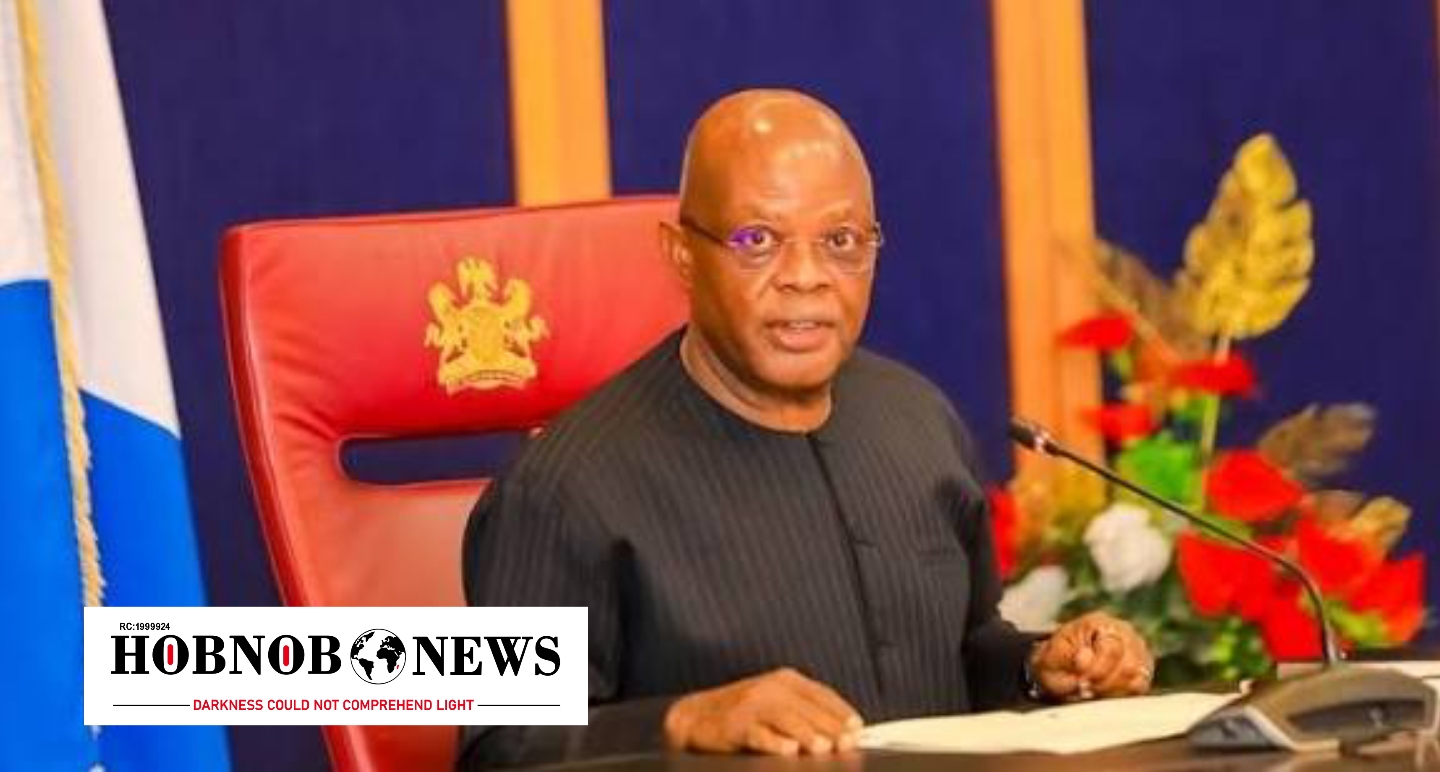
The immediate past Rivers State Administrator, Vice Admiral Ibok-Ete Ibas (retd.), may face a political standoff with the Rivers State House of Assembly following the lawmakers’ decision to investigate the state’s spending during his six-month tenure.
Ibas left office on September 17, after President Bola Tinubu ended the emergency rule in the oil-rich state and ordered the reinstatement of suspended Governor Siminalayi Fubara, his deputy, and state lawmakers.
During its first plenary after the emergency rule, the House, led by Speaker Martin Amaewhule, resolved to probe expenditures under Ibas, stating the aim was “to explore the process of knowing what transpired during the emergency rule regarding spending from the consolidated revenue fund for the award of contracts and other expenditures.”
Analysis shows Rivers received at least N254.37bn from the Federation Account Allocation Committee (FAAC) between March and August 2025. Figures indicate allocations of N44.66bn in March, N44.42bn in April, N42.80bn in May, N42.30bn in June, N38.42bn in July, and N41.76bn in August, averaging N42.40bn per month. September inflows could push the seven-month total to nearly N297bn.
Oil derivation remained the state’s largest income source, accounting for 52.4 per cent of FAAC allocations. Rivers received N133.24bn in derivation over six months, dwarfing statutory allocations. Debt servicing consumed N26.31bn, over 10 per cent of statutory allocations, while VAT receipts of N107.78bn cushioned the state’s finances. Other inflows from the Electronic Money Transfer Levy, ecology funds, and exchange gains also bolstered net receipts.
Despite these allocations, Rivers has not published its 2025 Budget Implementation Report, leaving citizens and civil society unable to track expenditures on capital projects, salaries, pensions, or recurrent costs.
Political tensions in Rivers stemmed from a protracted dispute between former Governor Nyesom Wike and Fubara. To restore stability, President Tinubu declared a state of emergency on March 18, 2025, suspending the governor, deputy, and lawmakers for six months—a move later endorsed by the National Assembly. Eleven PDP governors challenged the suspension at the Supreme Court (SC/CV/329/2025), but no public update has emerged.
Local elections on August 30 saw the APC win 20 seats and the PDP three, signalling some political calm. Ibas defended his tenure, claiming he fulfilled the presidential mandate and stabilised the state. Yet opposition parties and civil society have called for scrutiny of his resource management.
Enefaa Georgewill, Chairman of the Coalition of Civil Society Organisations in Rivers, criticised Ibas’s spending, pointing to stalled projects including the House of Assembly Complex, and urged Governor Fubara to establish an inquiry panel. Emma Obe, spokesperson for the Civil Liberties Organisation in Rivers, echoed concerns, highlighting that the 2025 budget bypassed public hearings, denying citizens transparency.
Reacting to the Assembly’s probe, Ibas insisted the lawmakers lacked authority over him, as he was appointed by the President and supervised by the National Assembly. Speaking through his media adviser Hector Igbikiowubu, Ibas described the investigation as a “fool’s errand,” noting that while lawmakers are free to conduct inquiries, they cannot supersede the constitutional framework.
“When you probe the administrator, you’re effectively probing the President and the National Assembly,” Igbikiowubu said. “We wish them good luck, but such an enterprise amounts to a fool’s errand.”

