

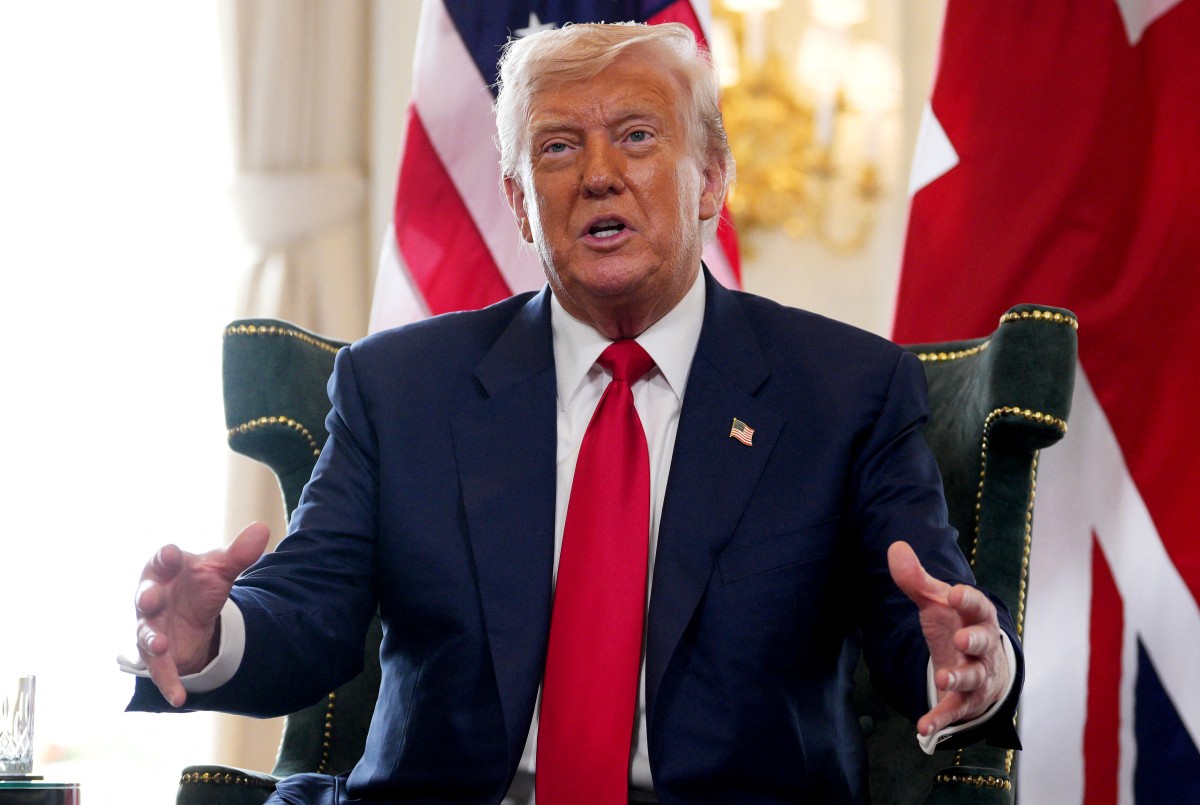
India’s export sector is reeling following U.S. President Donald Trump’s latest directive to double tariffs on Indian goods, citing New Delhi’s continued purchase of discounted Russian crude oil.
The move, which raises existing levies from 25% to 50%, has sparked concerns across India’s trade and economic sectors, with industry leaders warning of a serious blow to competitiveness and profitability.
The new tariff measure, signed into effect on Wednesday, comes in response to what Washington calls India’s “unwavering” energy ties with Russia — a critical revenue lifeline for Moscow amid ongoing sanctions tied to the war in Ukraine.
India, currently the world’s second-largest buyer of Russian oil, has defended its energy policy as economically strategic, but Trump’s response has turned up the heat on bilateral trade relations.
On Thursday, Indian markets reacted to the announcement, with the benchmark Nifty index slipping by 0.31 percent in early trading. The financial tremors are expected to intensify as the full 50 percent tariff takes effect in three weeks.
In a strongly worded statement, India’s Ministry of External Affairs condemned the U.S. action, calling it “unfair, unjustified, and unreasonable.”
Industry leaders are sounding the alarm. S.C. Ralhan, President of the Federation of Indian Export Organisations (FIEO), warned that the new duties place Indian exporters at a significant disadvantage.
“This move is a severe setback for Indian exports, with nearly 55% of our shipments to the U.S. directly affected,” Ralhan said. “The 50% tariff imposes a cost burden that puts our exporters at a 30–35% disadvantage compared to peers from other countries.”
He added that many buyers have already paused or reconsidered their orders, and small-to-medium-sized enterprises (SMEs) — which dominate India’s export ecosystem — may not be able to absorb the sudden cost shock.
“For a large number of SMEs, margins are razor-thin. This level of tariff makes continuing business with U.S. clients financially unviable,” Ralhan said.
In 2024, India shipped $87.4 billion worth of goods to the United States — making it New Delhi’s single largest trading partner. The economic relationship is pivotal, not just for trade volume, but for India’s broader positioning as a global manufacturing hub.
But that standing may now be in jeopardy.
Shilan Shah, a senior economist at Capital Economics, warned that the punitive tariffs could have significant macroeconomic consequences.
“If the extra 25% tariff remains in place, India’s attractiveness as an emerging manufacturing base will be severely undermined,” Shah said in a client note.
According to Shah, U.S. consumer spending supports roughly 2.5% of India’s GDP. The added tariffs are large enough to shave a full percentage point off projected growth rates.
“We expect India’s GDP to now grow closer to 6% in 2025, down from our previous 7% forecast,” he added.
With tensions mounting and no clear resolution in sight, analysts are closely watching how India balances its energy diplomacy with Russia against the growing trade strain with Washington.

