

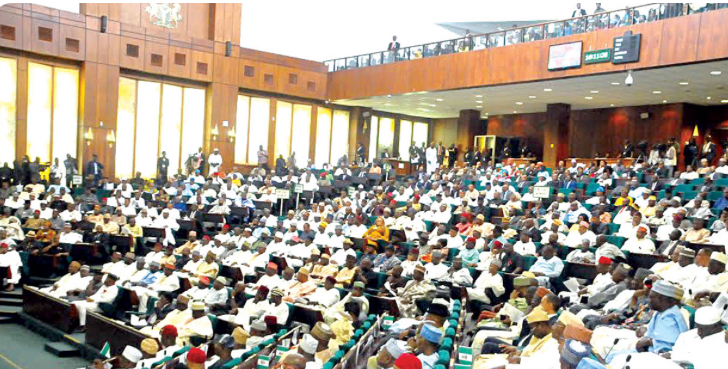
A prominent Benin sociocultural organization, Ogbakha-Edo, has strongly opposed a bill currently before the National Assembly seeking to establish a National Council of Traditional Rulers, citing concerns over a controversial provision that proposes permanent co-chairmanship positions for the Sultan of Sokoto and the Ooni of Ife.
In a statement presented by its chairman, Prof. Sam Guobadia, and co-signed by secretary Dr. Andrew Osaretin Izekor, the group denounced the provision as “provocative, divisive, and culturally offensive,” calling instead for a rotational leadership structure within the proposed council.
“We find it highly inappropriate to perpetually subjugate the Oba of Benin by way of an illogical constitutional enactment,” Guobadia stated. “This ill-conceived and historically unjustifiable proposal is not only logically flawed but also provocative, divisive, and culturally offensive.”
According to Hobnob News, Ogbakha-Edo argued that the Oba of Benin’s authority historically extended far beyond the current boundaries of Edo State, reaching into parts of present-day Delta, Ondo, Lagos, and even the Benin Republic, long before colonial structures redefined territorial rule in Nigeria.
“The Oba of Benin was not merely a king, but an emperor with vast dominions… Northwards, the influence of the Oba reached beyond Esanland and Afemai territories to the foothills of the Kukuruku Mountains,” the group noted.
Ogbakha-Edo also challenged the selection criteria used in naming the Sultan and Ooni as co-chairmen, alleging that the decision prioritized geopolitical considerations over historical and cultural significance.
“It is very obvious that in arriving at the conclusion that only the Ooni of Ife and the Sultan of Sokoto should be permanent co-chairmen, ostensibly to represent the geopolitical north and south regions, historical, territorial, and cultural pedigree were not taken into account,” the statement read.
The group has called for the immediate withdrawal or amendment of the bill to ensure a non-permanent, rotational leadership structure that includes all recognised first-class traditional rulers, thereby promoting fairness and national unity.

