

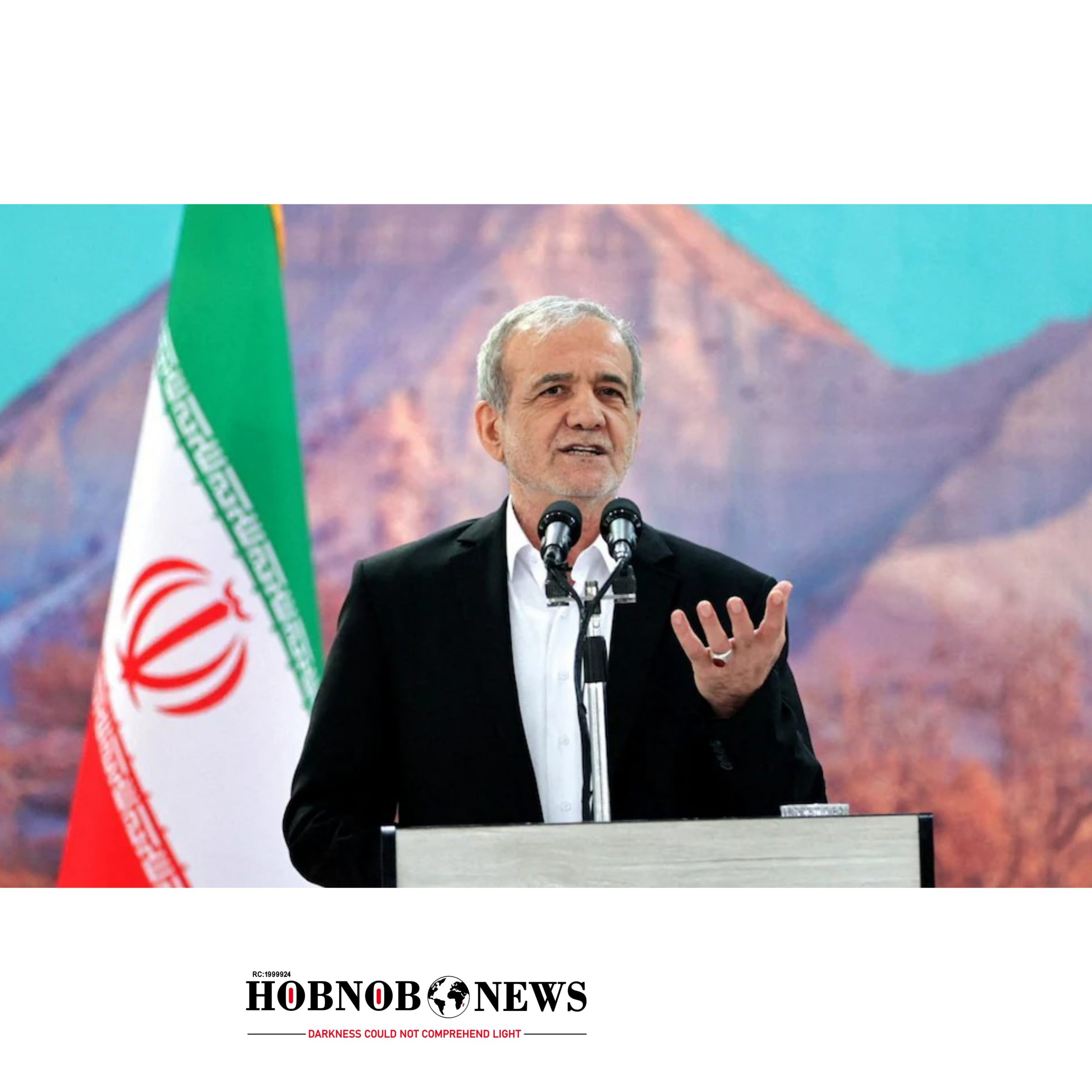
Iran’s president, Masoud Pezeshkian, was injured in an Israeli airstrike that targeted a Supreme National Security Council meeting, Tehran has confirmed.
The strike, which occurred on June 16 during the 12-day war, saw six missiles hit the council’s meeting venue in western Tehran. Pezeshkian, 70, sustained a leg injury and escaped through a pre-planned emergency hatch, according to the Islamic Revolutionary Guard Corps (IRGC)-linked Fars news agency.
Fars said other top officials, including parliament speaker Mohammad Bagher Ghalibaf and judiciary chief Mohseni Ejei, were also present. The agency described the attack as similar to Israel’s strike that killed Hezbollah leader Hassan Nasrallah in Beirut last year.
“The attackers targeted entrances and exits to block escape and cut off air flow,” Fars reported. Power was lost on the building’s floor, and several officials reportedly suffered minor injuries while evacuating.
The precise nature of the attack has raised suspicion of an insider leak. Iranian authorities have arrested over 700 people since the conflict, accusing them of collaborating with Israel, and are pushing for an emergency spy law introducing harsher penalties, including execution.
Although Fars did not reveal the location, Iran International reported the strike hit near Shahrak-e Gharb in western Tehran. IRGC General Mohsen Rezaei claimed Israel struck six points but insisted “not the slightest harm” befell council members.
In a recent interview with Tucker Carlson, Pezeshkian confirmed that Israel tried to assassinate him but had not previously disclosed his injury. “They did try… but they failed,” he said.
His comments sparked backlash from 24 MPs, who accused him of undermining national security. They cited his openness to U.S. negotiations despite American strikes on three nuclear sites and his cooperation with the International Atomic Energy Agency, which Iran has since expelled.
In their letter, the lawmakers warned: “Such messaging risks inviting further aggression. If there were divided views on resisting American overreach before June 12, this war generated rare unity around confronting the United States and its proxy, the Zionist regime.”

