

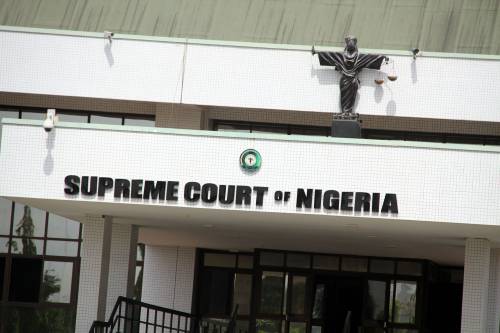
One year after the Supreme Court’s landmark ruling mandating full financial autonomy for Nigeria’s 774 local government areas, state governors continue to defy the order by withholding over ₦4.5 trillion in allocations meant to be disbursed directly to the councils.
On July 11, 2024, the apex court declared the indirect allocation of funds to local governments through state governments unconstitutional and directed the Federal Government to ensure direct funding. The Central Bank of Nigeria (CBN) was instructed to open dedicated accounts for each local council. However, investigations by Hobnob News reveal that this directive remains largely unimplemented.
Despite setting up an inter-agency implementation committee chaired by the Secretary to the Government of the Federation (SGF), and assurances by the Attorney General of the Federation (AGF), the method of allocation has seen little change. Between July 2024 and June 2025, local councils reportedly received ₦4.496 trillion, representing 24.87% of the total ₦18.074 trillion shared among the three tiers of government. Yet, these disbursements continued to flow through state-controlled joint accounts.
Monthly disbursements remained steady, with ₦337.02bn released in July 2024 and ₦419.97bn by June 2025. However, stakeholders say the real issue lies in non-compliance with the direct disbursement mandate.
According to a source within the Office of the AGF, “The AGF has fulfilled his responsibility. The rest lies with the committee chaired by the SGF and other parties such as ALGON, Labour, and the Ministry of Finance.”
Frustration Mounts Across States
The Association of Local Governments of Nigeria (ALGON) and the National Union of Local Government Employees (NULGE) have expressed growing concerns over the delayed implementation. ALGON’s General Secretary, Mohammed Abubakar, said they are still awaiting updates from the SGF on documents submitted to President Bola Tinubu.
In Gombe State, the NLC chairman, Yusuf Bello, confirmed that local council chairmen remain without control over their finances. “The scenario is the same nationwide. Appointed chairmen are powerless over their funds,” he lamented.
Similarly, Kwara, Kano, and Benue States are yet to operationalize the CBN accounts. In Benue, local council chairmen dismissed the state’s claims of compliance as “false and misleading,” with some revealing they receive as little as ₦10 million monthly as security votes, despite their actual federal allocations exceeding ₦385 million.
Kano State officials noted that although CBN had opened accounts, local councils had not regularized them. They blamed internal politics and lack of will among local chairmen and union leaders for the delay.
Mixed Reactions Across Other States
In Bayelsa, the Joint Account Allocation Committee (JAAC) system remains active, with local governments managing allocations alongside the state. Meanwhile, in Nasarawa, the NULGE chairman confirmed that LGs have opened CBN accounts but have yet to receive direct allocations.
In Bauchi, Jigawa, and other northern states, partial compliance and administrative bottlenecks persist. The Jigawa NULGE chairman, Abubakar Shitu, noted that while financial autonomy is largely observed, full administrative independence remains elusive. “Some statutory deductions are legal, but autonomy must go beyond that,” he emphasized.
In contrast, Adamawa State stands out as a model. According to ALGON Chairman Suleiman Gankuba and the State Commissioner of Finance, Augustina Wandamiya, Governor Ahmadu Fintiri granted autonomy before the Supreme Court ruling, demonstrating a commitment to decentralization.
Legal Experts React
Prominent constitutional lawyers, including Prof. Mike Ozekhome (SAN), Femi Falana (SAN), Prof. Itse Sagay (SAN), and Adedayo Adedeji (SAN), have condemned the prolonged disregard for the judgment.
Prof. Ozekhome described the situation as “a calculated sabotage of grassroots governance,” accusing governors of manipulating a system that keeps local councils weak and dependent.
Falana, who had previously hailed the judgment, criticized the AGF for failing to enforce it. He pointed out the absurdity of demanding two years of audited financial reports from councils that never received direct funding.
While Prof. Sagay argued that the Supreme Court ruling, though noble, conflicted with the 1999 Constitution’s recognition of joint accounts, other legal minds insisted that the ruling should override existing practices until constitutional amendments are made.
A Systemic Failure
Senior lawyers like Paul Obi (SAN) attribute the impasse to “political selfishness” and a lack of commitment to true federalism. “The continued flouting of the judgment reveals how deep-rooted the culture of impunity is among Nigeria’s political elite,” he said.
Despite claims by the Federal Government that it is working on resolving the bottlenecks, critics argue that the lack of political will across all tiers of government makes the autonomy judgment little more than a symbolic victory.
As grassroots development continues to suffer, the question remains: when will local governments in Nigeria truly be free?

