

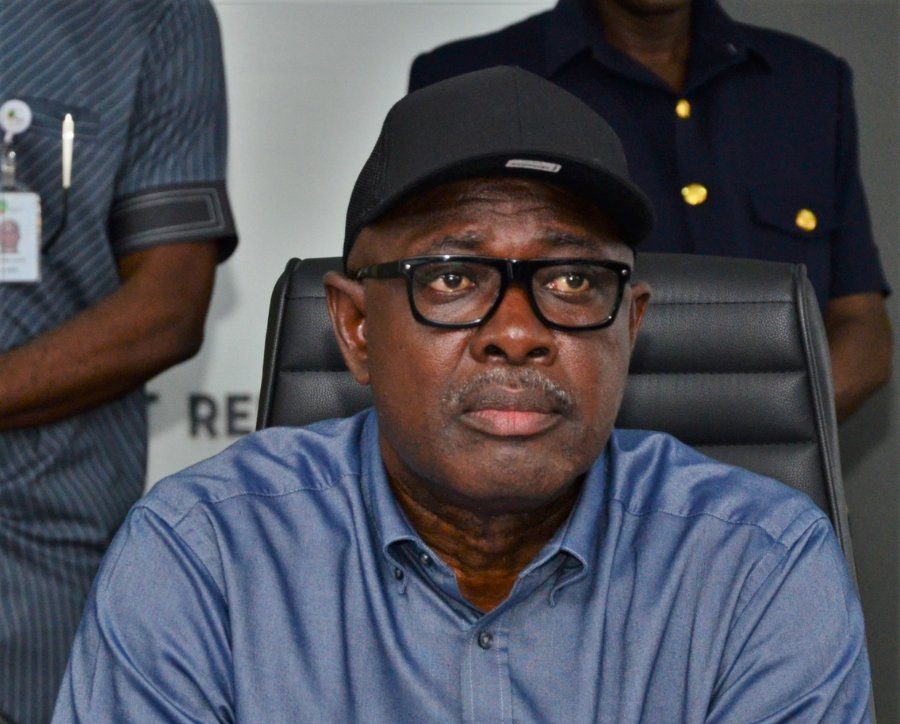
The Minister of State for Petroleum Resources (Oil), Senator Heineken Lokpobiri, has strongly criticised the frequent and retroactive summons of International Oil Companies (IOCs) by committees of the National Assembly, warning that such actions are counterproductive and risk destabilising investor confidence in Nigeria’s oil and gas sector.
Speaking at the Nigeria Oil and Gas (NOG) 2025 Conference and Exhibition in Abuja, the minister expressed concern that the uncoordinated legislative interventions, particularly those involving issues from nearly two decades ago, were sending the wrong signals to international investors.
“These summons reach the global headquarters of the IOCs and immediately raise red flags. In countries where due process and institutional memory matter, being summoned by a parliamentary body is no small issue,” Lokpobiri told delegates.
He pointedly referenced recent invitations extended by legislative procurement committees to IOCs over matters dating as far back as 18 to 20 years, without first seeking clarification from the Ministry of Petroleum Resources.
“What business does the Committee on Procurement have summoning oil companies over transactions that happened nearly two decades ago? We should not play politics with an industry that contributes over 80% of Nigeria’s export earnings,” he said.
Economic Lifeline Must Be Protected
Lokpobiri stressed that the oil and gas sector remains the backbone of Nigeria’s economy, urging all arms of government to treat it with the utmost strategic importance.
“The global energy community is watching. Our messaging must be consistent. If we scare investors away with baseless probes, we will lose the capital we desperately need to grow our reserves and meet domestic demand.”
Crude Output and the Way Forward
On Nigeria’s current oil output, the minister revealed that daily production stands at 1.745 million barrels per day, including condensates. He emphasised the urgent need to ramp up production, highlighting it as critical for national development and fiscal sustainability.
“We must boost our output to remain relevant in the global energy space and to finance development priorities at home,” he added.
Lokpobiri concluded by calling for improved synergy between the legislature and executive arms of government, adding that sensitive industry issues should be handled with care to avoid unintended economic fallout.
Stay tuned to Hobnob News for mo
re on Ni

