

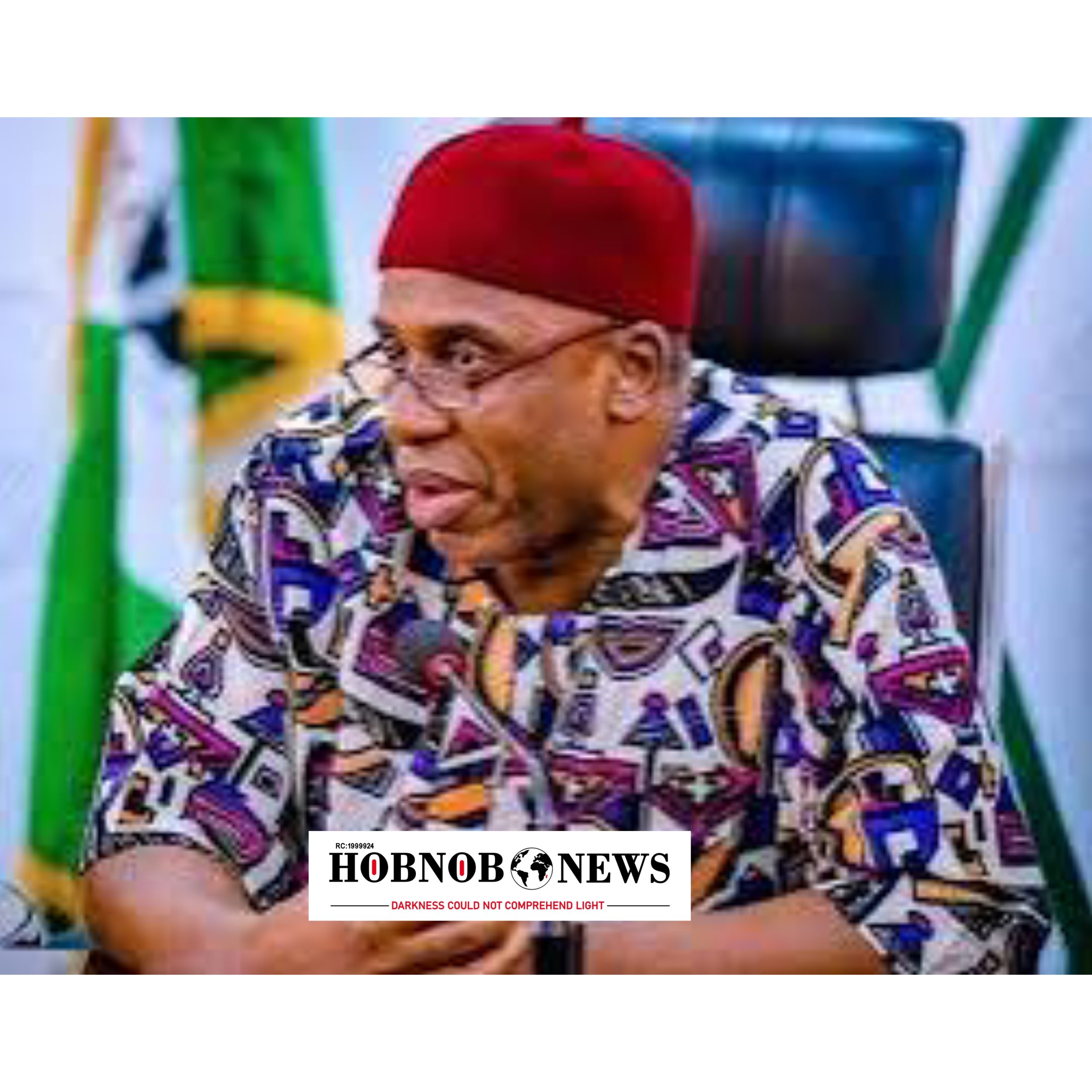
Former Minister of Transportation and ex-Governor of Rivers State, Rotimi Amaechi, has clarified his stance on his ethnic identity, admitting that his past claims of being Igbo were politically motivated. The prominent All Progressives Congress (APC) chieftain made the revelation during a recent media engagement, stating plainly: “I’m an Ikwerre man; my claiming Igbo was just political.”
Amaechi’s admission has reignited longstanding debates about the blurred cultural and political boundaries between the Ikwerre and Igbo peoples, particularly in Rivers State and Nigeria’s Southeast region. Historically, Amaechi had identified as Igbo during political campaigns—most notably in 2015 when he addressed a crowd in Aba and declared, “I am a bona fide Igbo man. My name is Amaechi.”
However, this recent backtracking suggests a deliberate political strategy aimed at gaining electoral traction among the Igbo electorate. “It was politics,” he stated, acknowledging that the identification was not rooted in ethnic conviction but political calculation.
The Ikwerre ethnic group, largely concentrated in Rivers State, shares linguistic and cultural ties with the Igbo but retains a distinct identity. This complexity has often made it a point of contention in regional politics.
Amaechi’s latest remarks have sparked mixed reactions. Some political observers argue that his clarification is timely and transparent, while others view it as opportunistic and divisive. Critics say the statement may further alienate him from Igbo supporters who once saw him as a cultural ally.
Analysts say the comment reflects broader challenges in Nigeria’s political landscape, where ethnic affiliation frequently intersects with strategic positioning and electoral advantage.
As conversations continue, Amaechi’s statement is expected to stir further debate on the use of ethnic identity as a political tool in Nigeria’s fragile federation.

