

Nigeria’s solid minerals sector has recorded an impressive leap in revenue generation and foreign investment in 2024, signaling a new era of economic diversification and reform under the administration of President Bola Ahmed Tinubu.
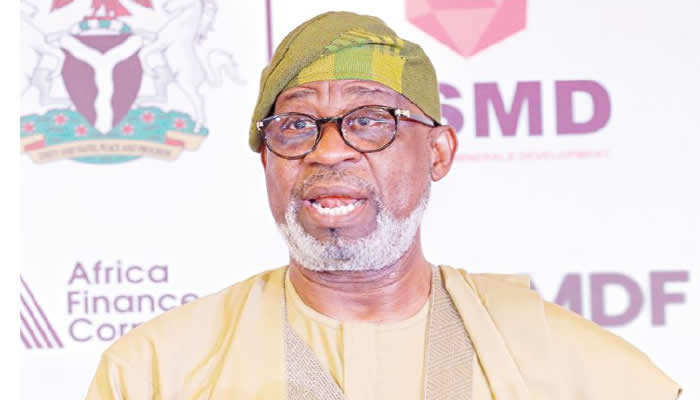
According to the Minister of Solid Minerals Development, Dr. Dele Alake, the sector generated over N38 billion in 2024—an exponential rise from the N6 billion recorded the previous year. This growth, he said, was achieved despite receiving just 18% of its N29 billion budget allocation.
The announcement was made during a special feature interview with Dr. Alake, which is part of a documentary to mark President Tinubu’s second year in office. Excerpts from the documentary were shared on Sunday by the President’s Special Adviser on Information and Strategy, Mr. Bayo Onanuga.
Dr. Alake attributed the rapid growth to a series of targeted reforms, including a tightened licensing system, aggressive anti-illegal mining operations, and a policy shift mandating local processing of mineral resources before export.
“The days of exporting raw minerals from pit to port are over,” Alake declared, noting that no miner is granted a license without a commitment to set up a local processing facility.
Among the notable investments is a $600 million lithium processing plant at the Kaduna-Niger border, set for commissioning in Q2 2025, and a $200 million lithium refinery outside Abuja, nearing completion. Additionally, two more plants in Nasarawa are slated to open before Q3 2025.
These efforts, according to Alake, have sparked increased global interest in Nigeria’s critical minerals. “We’ve seen positive engagements from the UK, U.S., Saudi Arabia, and the UAE. The former British Deputy Prime Minister even invited me to Downing Street to discuss lithium investment opportunities,” he said.
The sector is already showing strong signs of further growth in 2025. In Q1 alone, the Mining Cadastral Office and the Mines Inspectorate generated N6.9 billion and N7 billion, respectively.
Highlighting Nigeria’s renewed focus on credible geological data, the Minister revealed that a N1 trillion exploration fund has been earmarked to generate internationally certified data—crucial for attracting serious investors.
“We are determined to convert our mineral wealth into real economic value: jobs, technology transfer, and manufacturing,” Alake said.
In the fight against illegal mining, over 300 arrests were made in the past year, with 150 ongoing prosecutions and nine convictions, including foreign nationals. The Ministry is also working to integrate artisanal miners into the formal economy through 250 newly formed cooperatives, giving them access to finance and legal mining opportunities.
Dr. Alake also announced that Nigeria now chairs the newly established African Mineral Strategy Group, a continental body aimed at promoting value addition and equitable mineral trade deals across Africa.
“Nigeria has never had it this good in the solid minerals sector. We are restoring confidence, enforcing laws, and putting Nigerians first in the use of their natural resources,” the Minister concluded.
With over 10,000 license applications submitted this quarter alone, the mining sector is fast becoming a central pillar in Nigeria’s economic transformation plan.

