Written By Prince Tubo Johnson Aghogho.
“This is Nigeria, it is a country of OLE, thieves. They have the resources to prevent you from getting there, and even if you got there, they will turn this country upside down, there will be chaos, they will ensure they shut you down. I know them…I don’t see how a just man can rule Nigeria successfully. This is a country of thieves”….Dr Victor Omololu Olunloyo(1935-2025).
Like never before, it has been cleared as though the renewed antagonism across the country and within the party politics in every electoral cycle, have become very ominous.
And no doubt that, the trend has once again reminded us of the characterization of what repeated itself both in the first Republic and even during the time of the military administrations when tribal/ethnic colourations have had effects.
However, it is imperative to note that although the author is not favourably dispose to any preferred candidate in mind, but it is instructive to clarify that the political ecosystem as observed over the years in the country (Nigeria), does not seem to withstand the vagaries of democratic integrity, accountability and transparency, as non-compliance to the rule of law, and exhibition of impunity by politicians become the hallmark.
That, after 66 years of political independence, the country still find herself embroiled in political fury, where tribal and ethnic “Lords and Emperors” see themselves as custodians of the collective patrimony of the State, resulting as the dark side of the Nation’s political journey.
But by and large, until concerted efforts are made deliberately going forward, it would be extremely difficult to unite and live together for the common good of the people and the country.
That being said, the starting statement as attributed to Dr Victor Omololu Olunloyo who was a former Oyo State Governor, which was made during an interactive discussion with Chief Obafemi Awolowo, provides an underlying characteristics of Nigeria’s politicians and public office holders, as for instance, judges are alleged to have been entangled in bribery and influence electoral results, when public holders would loot public funds entrusted in their care, when politicians representing the citizens at the National Assembly (NASS), State Assemblies and Local government areas councils, Ministers and Commissioners, would misappropriate or mismanage State resources.
In the same vein, another statement which is ascribed to the former President of the United States, Harry S. Truman (1884-1972), and I quote, “No man can get rich in politics unless he’s a crook”, end of quote, also reflects the true narrative and dark side of Nigeria’s political landscape and democratic journey, as corrupt practices are said to have been a signpost for our politicians in the country.
Meanwhile, instead of realising themselves and resisting these factors that have become the albatross and debilitating insignia against the system, the same politicians continue to exhibit the dark side of our democracy, that negate true democratic tenet, as it exposed the epiphany of their place in history.
It imperative to know that the struggle to Nigeria’s political and democratic journey has had a tumultuous experiences – both exciting, emotional and as well as full of confusion and disorder. Which is why it was characterised with love and hate.
The time between October 1st, 1960 when the British Colonial Masters handed us independence and 2026 is 66 years, during which there were three (3) regions – North, East and West, while in August 1963, the fourth region – Mid-West region was created.
However, it is instructive to note that even though there were no alignment among, and between the regional leaders – Dr Nnamdi Azikiwe, Chief Obafemi Awolowo, Sir Ahmadu Bello and Sir Dennis Osadebay, but they were able stir the ship or affairs of their respective region.
But be that as it may, the characteristics associated with leadership indicated that there were no smooth sails (it was not smooth sailing), as it was alleged that the first Republic was characterised with high-handedness, corruption and ostentatious lifestyle by politicians.
The first Republic was also associated with electoral irregularities and population census figures both in the regions and at the federal level, especially in the old Western region where it escalated to what was referred to as “operation wetie” resulting in setting ablaze of people and properties and the legendary name tag as “Wild Wild West” during the Awolowo-Akintola schism in the old Western region which precipitated the crisis leading to the coup in January 1966.
Therefore, it wasn’t a surprise that it was in the midst (middle) of these crises on January 15 1966, that the first military coup led by young officers and led Major Chukwuma Kaduna Nzeogwu, Major Emmanuel Ifeajuna, Major Adewale Ademoyega. Others include, Major Timothy Onwuatuegwu, Major Donatus Okafor, Major Humphrey Chukwuka, Capt. Chris Anuforo, Capt. Ben Gbulie, and Capt. Emmanuel Nwobosi.
The victims of the first military coup of January 15, 1966 claimed the lives of the following: Sir Ahmadu Bello, Premier of Northern region, his wife and 3 of his staff, Sir Abubakar Tafawa Balewa, Prime Minister, Chief Festus Okotie-Eboh, Finance Minister, Brigadier Samuel Ademulegun, and his pregnant wife, Brigadier Zakariya Maimalari, Col. Kur Mohammed, Col. Ralph Shodeinde, Lt Col. Abogo, PCs Yohana Garkawa, Akpan Anduka, Hagai Lai, Philip Lewande.
No doubt that the period marks as a stain on the political journey of the country, as the follow up effect and implication couldn’t be fathomed with the impact of the July 29, 1966 counter-coup which is referred to as the revenge coup was masterminded by Northern military officers and led by Lt. Col. Murtala Mohammed, Major Theophilus Danjuma, Capt. Joseph Garba, Capt. William Walbe and other junior/mid-level officers like Muhammadu Buhari, Ibrahim Babangida, and Sani Abacha.
Furthermore, it is sad to note that it was during the counter-coup of July 29, 1966 that the organisers assassinated the Head of State, Major General Johnson Thomas Umunakwe Aguiyi-Ironsi and the old Western region Governor Lt Col. Francis Adekunle Fajuyi, and many Igbo officers/Soldiers across various garrisons, in addition to the general killing of innocent people, known as the “Igbo pogrom” in the North.
Meanwhile, it is imperative to note that the first coup was executed as a “child of necessity” as in the words of the organisers, it was to checkmate the high handedness and corruption in the country by politicians, and not with any tribal, ethic or religious sentiments. However, it was misinterpreted and misconstrued by those officers from the North. But all that happened had become history which should serve as nostalgic reflection and reminder for us to forge a united country together in brotherhood.
It must be noted that the crisis that led to the Civil War (the Nigeria-Biafra War) between 1967 and 1970 (3 years), is not something we should shove aside so easily.
It reminds us of the continued antagonism as though it serves as a stigma to the Igbo race in the country after 66 years of the coups – the first and the counter in 1966.
Paradoxically, the same antagonism, and marginalisation have failed to seize, as pointer to this was effected when in the 2nd Republic, a plan was orchestrated by mainly northern military officers organised another coup on December 31, 1983 to topple the Alhaji Shehu Shagari democratically elected government aiming that if the had successfully completed it’s tenure, maybe, the next President would have been Dr Alex Ekwueme as served as Vice President to Shehu Shagari.
Sadly, the military continued from then on till 1999, as they were totally in control distorting the political and democratic order of country, and governing it with impunity and yet enmeshed and embroiled in corruption and human rights abuse.
Yet, in what may seem as a well thought out plan to exhibit the dark side of the Nation’s democracy, and as if “to add insult to injury or rub salt in the wound”, the Ibrahim Babangida government treated the country and her citizens with levity, as he deliberately organised elections which was believed to have been the freest and fairest in recent times, and cancelled it with the influence of those whom he claimed to have been the owners of the country, and step aside. The ensuing drama, later brought another dictator as General Sani Abacha took over and subjected the country and her citizens in a more gruesome experience which has become part of the dark history in our political journey.
And the “man died” on June 8, 1998 in what may seem as though the gods were angry of the sins of those who had perpetrated hardship on the people. Yet, another Army General, Abdulsalami Abubakar became the Head of State leading to the beginning of the Fourth Republic 1999 during which it was widely reported that maybe, someone from the Igbo extraction, Dr Alex Ekwueme could be the next President. But this was not to be, as yet those who claim ownership and their military cohorts “ganged up and arranged” a compensatory plan for the Yorubas at least, to pacify the loss of Alhaji M. K. O. Abiola who was believed to have won the June 12 1993 general elections, as they brought forward former military Head of State, General Olusegun Obasanjo.
And so, that has been the story of antagonism and marginalisation against the Igbo in the scheme of things in the Nigeria’s political journey. Unfortunately, there are no true Nationalists in the country whom Nigerians can look unto or upon, to stir the political journey where the founding fathers stopped.
What we have are opportunistics politicians who are chess gamers that play politics for their personal interests, rather than the interests of the country and the people, as there is no one (except very few) to stand up with and whom they can be proud of, let alone to trust, as those at the helm of affairs, have daggers in their hearts against the citizens.
As it stands, with the constant fear and suspicion arising from the same antagonism and marginalisation, it doesn’t seem to be cleared as to whether or not, there is still room and opportunity for someone from the Eastern region to be become a President in Nigeria.
Recall the difference in opinions – a bias for that matter at the time of Goodluck Jonathan’s PDP era, when Catholic bishops blasted the government, governors of massive corruption and human rights abuse, as they stated that they were advocating for good governance.
However, in the APC’s Tinubu government, the same Catholic bishops have asked the government to do something about the hardship on the people, and the insecurity in the country, those working for the government and the tribal chiefs are saying that it is politics, as some of them even went ahead to praise the government the “saviour” of the country, saying the President has “done his absolute best”, which in my opinion, “is not good enough”. What a beautiful throwback and “double speak”!
This is more so, as electoral violence, voter’s suppression and ethnic politics have become a concern to Nigerians who believe in the Unity of the country.
That being said, even so, after 66 years of independence, those entrusted with leadership have shown incapacity, as they have not been able to learn and perfect the rudiments of political dexterity and governance rather than just playing politics. Which is why the country is still where has been if not worst, facing a significant of rebuild ahead of every electoral cycle, thereby leaving a vacuum for suspicion and anxiety in the political space.
This has become a pointer to the effect that citizens no longer have trust in the government, though with their counter claims of doing great job for the common people – removal of fuel subsidy resulting in increased revenue, floating of the Naira, unification of the foreign exchange markets, tax and fiscal overhaul, etc, which the claim has provided more revenue to State governments. However, there is nothing reflective in the lives of the people as more Nigerians have suffered multidimensional level of poverty, giving the country as the “poverty capital” of the world.
Furthermore, another dimension of the dark side of our political journey is the fact that, lies and deception have become governing tools for the government. Or who can imagine how an alleged fake agency of government – PFIPC and it’s DG, Prince Adeniyi Adeyemi Matthew, could confidently affirmed that he was assisted by those in authority to establish the alleged fake agency and allocate budget to it, and got approval by both the NASS and presidency, and when the President of the could become the spokesperson to the electoral umpire, INEC assuring Nigerians that INEC is sincere and would be a neutral Umpire in the midst of public suspicion and doubt. What a deliberate fulcrum to plan a manipulative effort to rigging the 2027 elections.
At the moment, it seems as though there is a loop which I referred to as “insecurity cartel” or “corruption cartel” in the government with much immunity with well connected routes and channels as associated with the alleged DG of government agency saga.
In the face of injustices and fear of the people for lack of trust, let it be reminded that donations of the houses as gifts by the executive arm of government to judges of the judicial arm, wouldn’t have negative effect and implications on the forthcoming elections in 2027.
In conclusion, therefore, conscientious efforts should be made to arrest the unpalatable outcomes of the general elections. Secondly, perpetrators and sponsors of electoral violence should be arrested and prosecuted to deter others.
Thirdly, political leaders should reduce their vitriol to whittle down the charged political atmosphere that is capable of railroading the country to something like what happened in 1994 Rwanda and Nigeria of the 1962-1965 experience, wherein census and electoral results were believed to have been manipulated.
Furthermore, the electoral umpire, INEC, should not be biased, but stick to the provisions of relevant electoral laws and guidelines on balloting, collation, tallying, transmission and announcement of election results in order to boost voter’s confidence in the electoral processes.
Above all, although it may seem as though a public perception issue, but deemed necessary that the ordinary citizens should be up and doing, and show their anger against bad leadership and democratic governance with seeming vendetta of public opprobrium for corrupt politicians – bad political leaders with a vote of “no confidence” during elections, and “burst their bubble” as implications. And the time starts now.
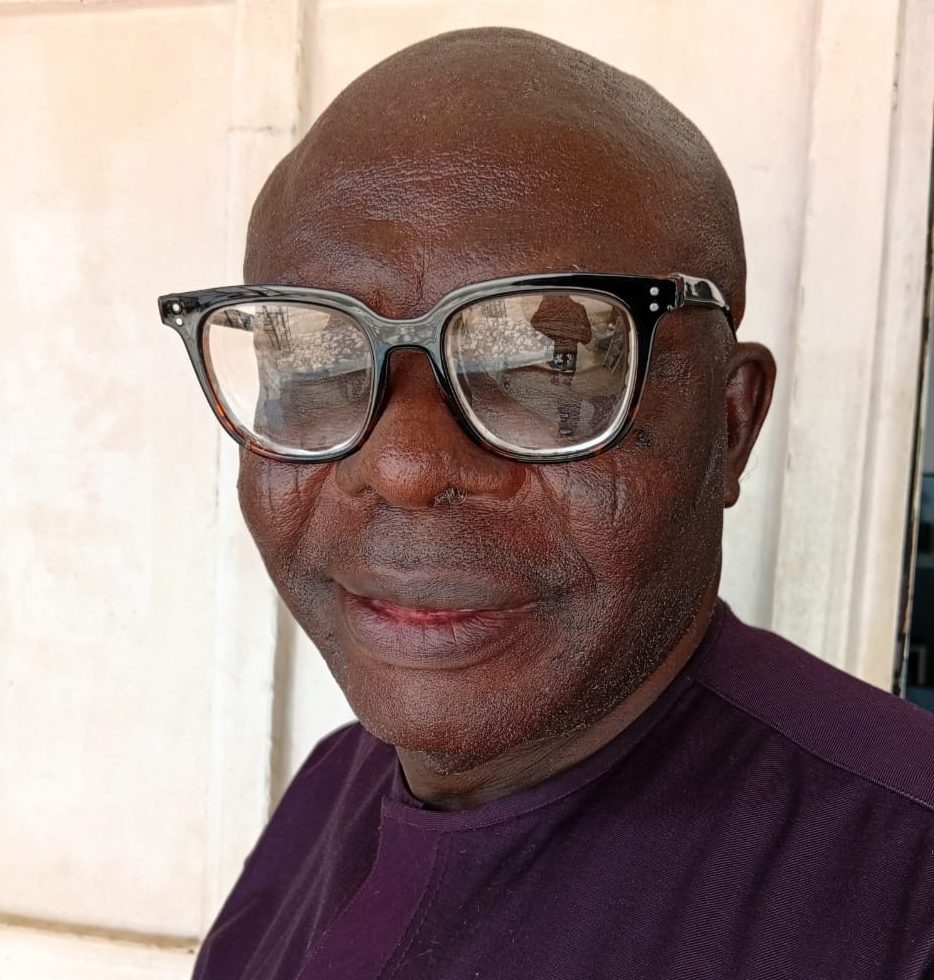
Prince Tubo Johnson Aghogho is a Columnist and Public Affairs Commentator.
About The Author