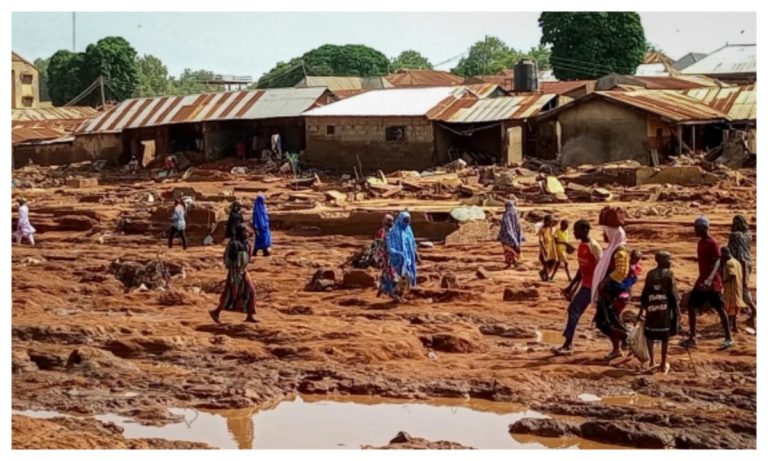
Climate Change Fueling Insecurity, Displacement Across Northern Nigeria, Experts Warn
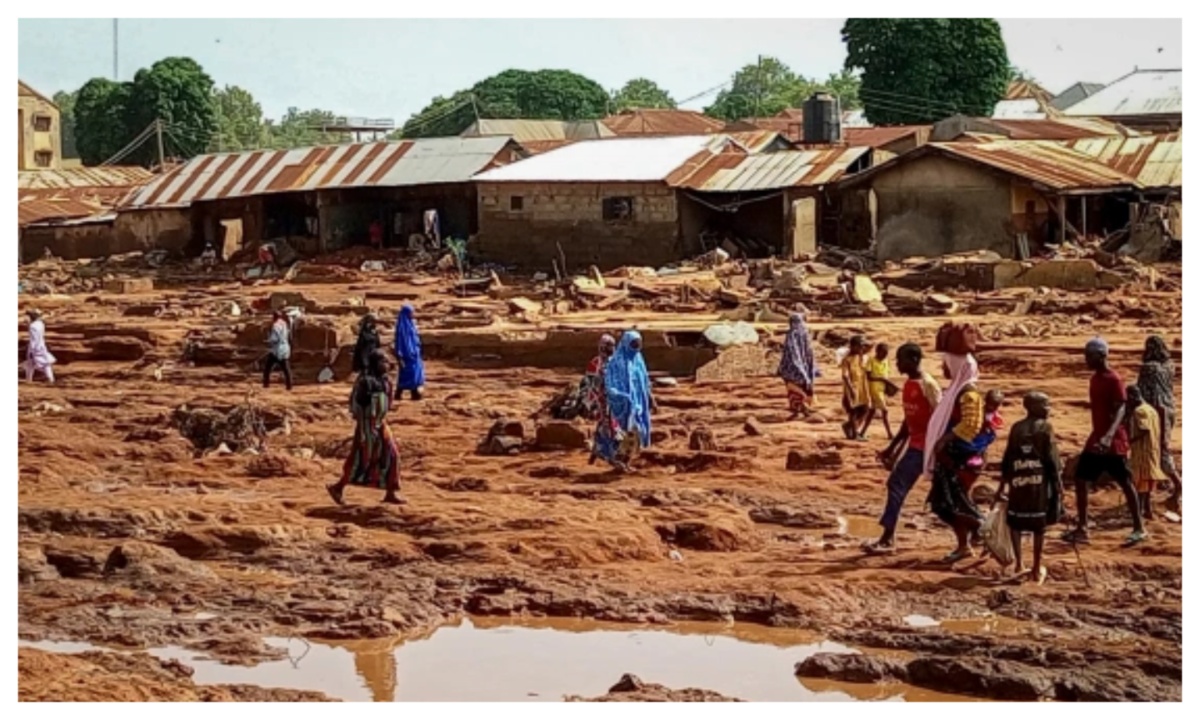
Climate change is increasingly driving insecurity, displacement and violent conflicts across northern Nigeria, with environmental experts, security analysts and affected pastoralists warning that worsening drought, desertification and shrinking water sources are intensifying competition over scarce resources and threatening livelihoods.
For elderly pastoralist Gidado Isyaku, who now sits beside his cattle on the outskirts of Shanono Local Government Area of Kano State, the once-routine search for grazing land has become a dangerous journey marked by bandit attacks, kidnappings and hostility from farming communities.
Recalling a time when he freely moved his herd across northern Nigeria and into neighbouring Cameroon in search of pasture, Isyaku said insecurity has forced many herders to abandon migration despite dwindling grazing resources.
“Bandits do not spare us either. Our cattle remain with us because it is too dangerous to travel. People now see us as criminals. But if there were enough grass and water, I swear I would never leave my home. I am tired of this constant movement,” he told DAILY POST.
His experience mirrors the plight of thousands of pastoralists across northern Nigeria, where prolonged drought, advancing desertification and the shrinking of water bodies are forcing communities to migrate in search of survival, often triggering violent clashes with farmers competing for the same land and water resources.
Climate Change a ‘Threat Multiplier’
Speaking exclusively with DAILY POST, environmentalist and climate change expert, Professor Aliyu Baba Nabegu, described climate change as one of the most significant security challenges facing Nigeria in the 21st century.
According to him, climate change does not directly cause conflict but serves as a “threat multiplier” by worsening existing social and economic vulnerabilities.
“Climate change largely acts as a ‘threat multiplier,’ compounding existing vulnerabilities rather than providing direct security benefits. The crisis has driven a major shift in Nigeria’s security architecture, incentivising a proactive, nationwide focus on security integration,” he said.
Professor Nabegu explained that the cross-border nature of climate-related challenges, particularly drought in northern Nigeria, has encouraged stronger collaboration among state governments through the establishment of six geopolitical regional development commissions, which have enhanced early-warning systems and data-sharing mechanisms.
He also noted that climate risks have accelerated investments in renewable energy and decentralized power generation.
“The vulnerability of centralized, fossil-fuel-dependent grids has accelerated investments in off-grid and renewable energy. Today, virtually all states have established independent power-generating facilities and Ministries of Power and Renewable Energy for long-term energy resilience,” he said.
The environmental expert further highlighted the gradual adoption of climate-smart agriculture and improved water management technologies as part of efforts to reduce future conflicts.
“Frequent crop failures and prolonged droughts are catalysing a transition toward climate-smart agriculture and improved water management technologies. These proactive adaptations protect future livelihoods and reduce the risk of conflict between pastoralists and farmers. The use of solar-powered irrigation pumps is a clear example,” he added.
However, Professor Nabegu warned that insecurity would continue to worsen unless governments address the loss of livelihoods caused by environmental degradation.
“If the government focuses on addressing the impacts of climate change, the situation will improve. Many pastoralists would not have migrated if Lake Chad had not receded. Thousands of fishermen lost their livelihoods because the water disappeared, while many farmers abandoned cultivation after the rivers and streams they depended on for irrigation dried up. When people lose their means of livelihood, some inevitably turn to criminal activities,” he said.
Climate Change Not the Only Driver
Retired security expert, Major General Gambo Ahmed Mai Adua, agreed that climate change has become one of the leading drivers of insecurity but cautioned against attributing the crisis solely to environmental factors.
“Climate change is one of the leading factors behind Nigeria’s insecurity, but it is not the only one. Poverty and instability in neighbouring countries such as Libya and Chad have also played major roles,” he told DAILY POST.
According to Mai Adua, prolonged drought, desertification and the shrinking of Lake Chad displaced thousands of pastoralists, compelling them to migrate across borders in search of water and grazing land.
“The drying up of rivers and lakes, especially Lake Chad, forced thousands of Fulani herders to move across borders in search of greener pastures for their livestock. That became the foundation of the conflict between herders and farmers, which later escalated into the security crisis we are witnessing today,” he said.
He added that the proliferation of illicit firearms from conflict-affected neighbouring countries significantly escalated local disputes into deadly violence.
“The proliferation of weapons from Libya and other neighbouring countries further aggravated the crisis,” he noted.
Mai Adua also observed that insecurity has evolved beyond farmer-herder clashes.
“The conflict is not only between farmers and herders. There are also violent clashes among herders themselves. Many who lost their livestock turned to cattle rustling because they had no other means of survival,” he said.
He explained that some individuals eventually became involved in kidnapping and other organised crimes after losing their traditional means of livelihood.
“Some attack fellow herders after losing their own cattle or because they never had any. They engage in cattle rustling and kidnapping. Climate change destroyed the grazing lands and livestock they had depended on for generations, leaving many without livelihoods,” he added.
Communities Bear the Burden
The impact of climate-induced migration is being felt beyond traditional grazing routes.
Pastoralists interviewed in parts of Jigawa and Bauchi states recounted losing family members, livestock and personal property to kidnappers while travelling in search of pasture and water, underscoring how environmental pressures are exposing already vulnerable communities to criminal violence.
Research Links Climate Change to Food Insecurity
Supporting the concerns raised by experts, a study by researchers from the Department of Agricultural Economics and Farm Management, Federal University of Agriculture, Abeokuta, titled “Climate Change, Natural Resource Conflicts and Insecurity in Nigeria: Implication for Food Security,” found that rising temperatures, erratic rainfall and advancing desertification have intensified competition over land and water resources.
The study concluded that environmental changes have forced many pastoralists to migrate southward in search of grazing land, increasing tensions with farming communities.
It also found that insecurity arising from farmer-herder conflicts, banditry and kidnappings has displaced thousands of farming households, destroyed farmlands, disrupted agricultural production and worsened food insecurity across the country.
Experts maintain that tackling the growing crisis will require sustained investment in climate adaptation, sustainable agriculture, environmental restoration, effective water resource management, poverty reduction, regional cooperation and stronger border security to curb the influx of illicit weapons.
For pastoralists like Gidado Isyaku, however, the solution remains straightforward.
“If there were enough grass and water for our livestock, I swear I would never leave my home. I am tired of this constant movement,” he said.