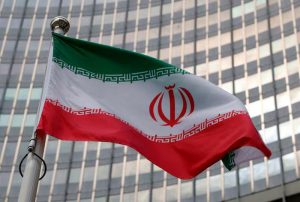
Senior Iranian officials, including Parliament Speaker Mohammad Bagher Ghalibaf, Foreign Minister Abbas Araghchi and Central Bank Governor Abdolnaser Hemmati, have arrived in Qatar for high-level talks with Prime Minister Sheikh Mohammed bin Abdulrahman Al Thani over a possible agreement with the United States aimed at ending the three-month Middle East conflict.
The discussions are also expected to focus on securing the release of Iran’s frozen assets and advancing negotiations surrounding Tehran’s nuclear programme.
The visit marks the first major diplomatic mission by top Iranian officials to the Gulf region since the outbreak of the conflict, during which Tehran launched thousands of drones and missiles across the region, including toward Qatar.
The development is being viewed as a sign of Qatar’s growing role in the negotiations, which had largely been facilitated by Pakistan in recent months.
Speaking earlier in New Delhi, United States Secretary of State Marco Rubio said Washington remained committed to diplomatic engagement with Tehran before considering alternative measures.
Rubio disclosed that a significant proposal was already under discussion involving the reopening of the Strait of Hormuz and fresh negotiations over Iran’s nuclear activities.
“There is a pretty solid thing on the table in terms of their ability to open up the Strait of Hormuz, get the strait open, enter into a very real, significant, time-limited negotiation on the nuclear matter, and hopefully we can pull it off,” Rubio told reporters.
United States President Donald Trump also confirmed ongoing discussions with Tehran in a lengthy post on Truth Social, while warning that military action could still be an option if diplomacy fails.
“It will only be a great deal for all, or no deal at all,” Trump wrote.
A source familiar with the negotiations said Ghalibaf and Araghchi arrived in Doha to participate in diplomatic efforts aimed at ending the conflict.
According to the source, discussions focused on issues surrounding the Strait of Hormuz, Iran’s stockpile of highly enriched uranium and the possible release of frozen Iranian funds.
“The Central Bank governor is part of the delegation to discuss the issue of frozen funds, which is addressed in the MoU as part of an eventual final deal,” the source said.
Iran’s state news agency, Islamic Republic News Agency, described the visit as part of an ongoing diplomatic process and confirmed that the delegation would meet with the Qatari prime minister.
The agency stated that Tehran intended to assess Washington’s seriousness before formally agreeing to any ceasefire arrangement.
“It appears that some American commitments under this agreement will be implemented with Doha’s assistance,” IRNA reported.
The report added that Iran also sought to determine Qatar’s readiness to support commitments expected from the United States under a future agreement.
Iranian Foreign Ministry spokesman Esmaeil Baghaei said some progress had been made in talks with Washington through Pakistan’s mediation efforts.
However, he cautioned that negotiations were still ongoing and no final agreement had yet been reached.
Meanwhile, Trump has reportedly urged countries including Qatar, Saudi Arabia, Pakistan, Egypt, Jordan and Turkey to join the Abraham Accords as part of a broader regional arrangement involving Iran and Israel.
“After all the work done by the United States to try and pull this very complex puzzle together, it should be mandatory that all of these Countries, at a minimum, simultaneously, sign onto the Abraham Accords,” Trump wrote on social media.